Waves Sync Vx vs VocAlign (2026): Which Vocal Alignment Plugin Should You Get?
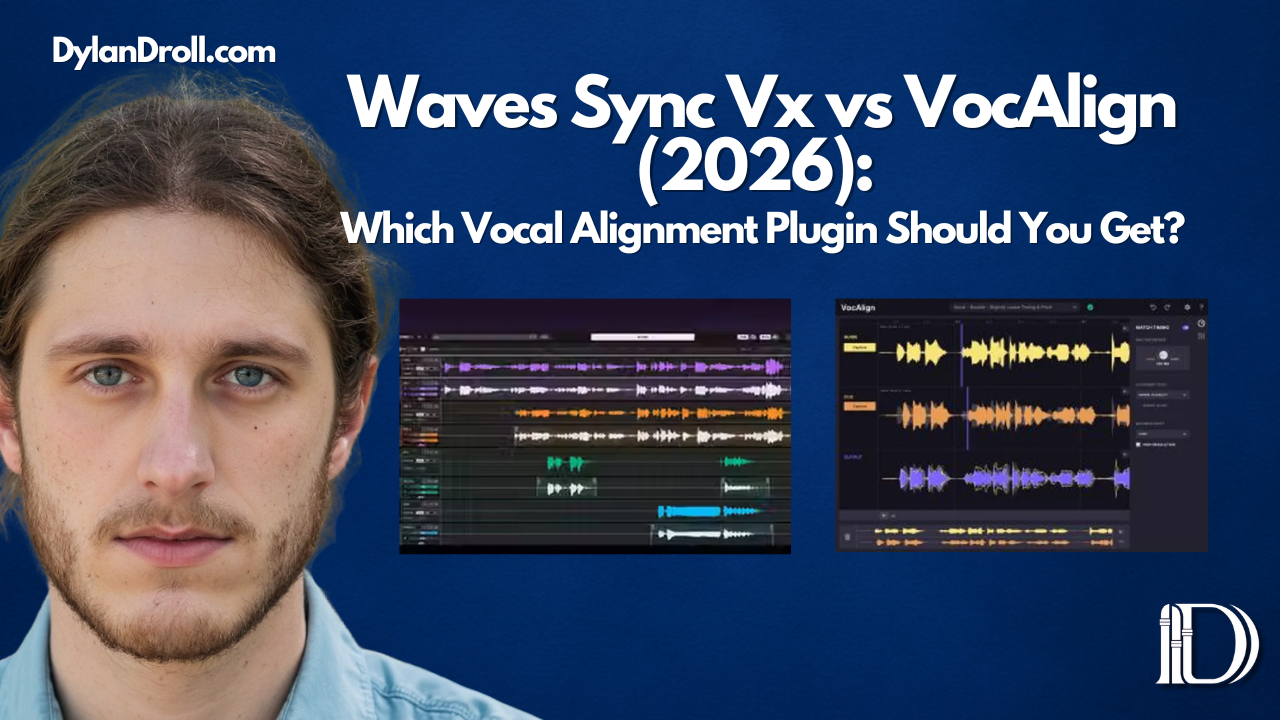
If you searched Waves Sync Vx vs VocAlign, you're probably trying to figure out the same thing a lot of engineers are asking right now:
Is the new Waves plugin actually good enough to replace the industry standard?
For years, Synchro Arts VocAlign was basically the only serious option for vocal alignment. If you stacked doubles or harmonies, you used VocAlign. That was the answer. Then Waves released Sync Vx at NAMM 2025 and suddenly there's a real conversation to be had.
I'm Dylan Droll — acoustic rap artist and mixing engineer. I've tested Sync Vx and I'm familiar with VocAlign. Here's the honest breakdown, including one thing most reviews skip that will affect your workflow immediately.
What vocal alignment plugins actually do
When you record vocal doubles or harmonies, the timing and pitch between takes is never perfectly tight — even with a great vocalist. Vocal alignment plugins analyze a reference track and automatically warp the other takes to match it. The result is a tighter, more cohesive stack without spending hours editing by hand.
Before tools like this existed, engineers did it manually in the DAW — zooming in and nudging regions by milliseconds. It worked, but it was slow. Alignment plugins collapsed that process to seconds.
What Waves Sync Vx is
Click here to purchase the Sync Vx plugin!
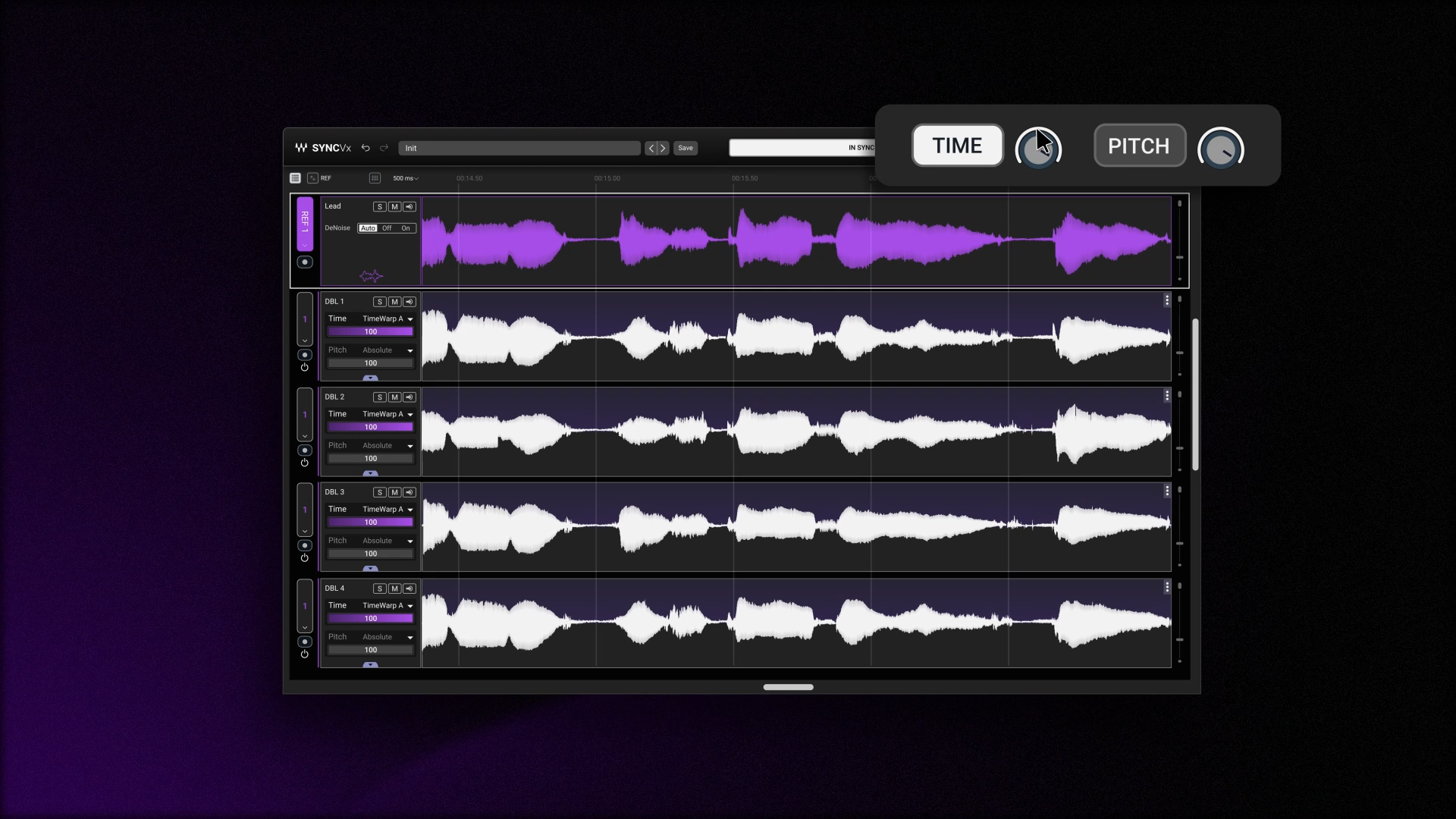
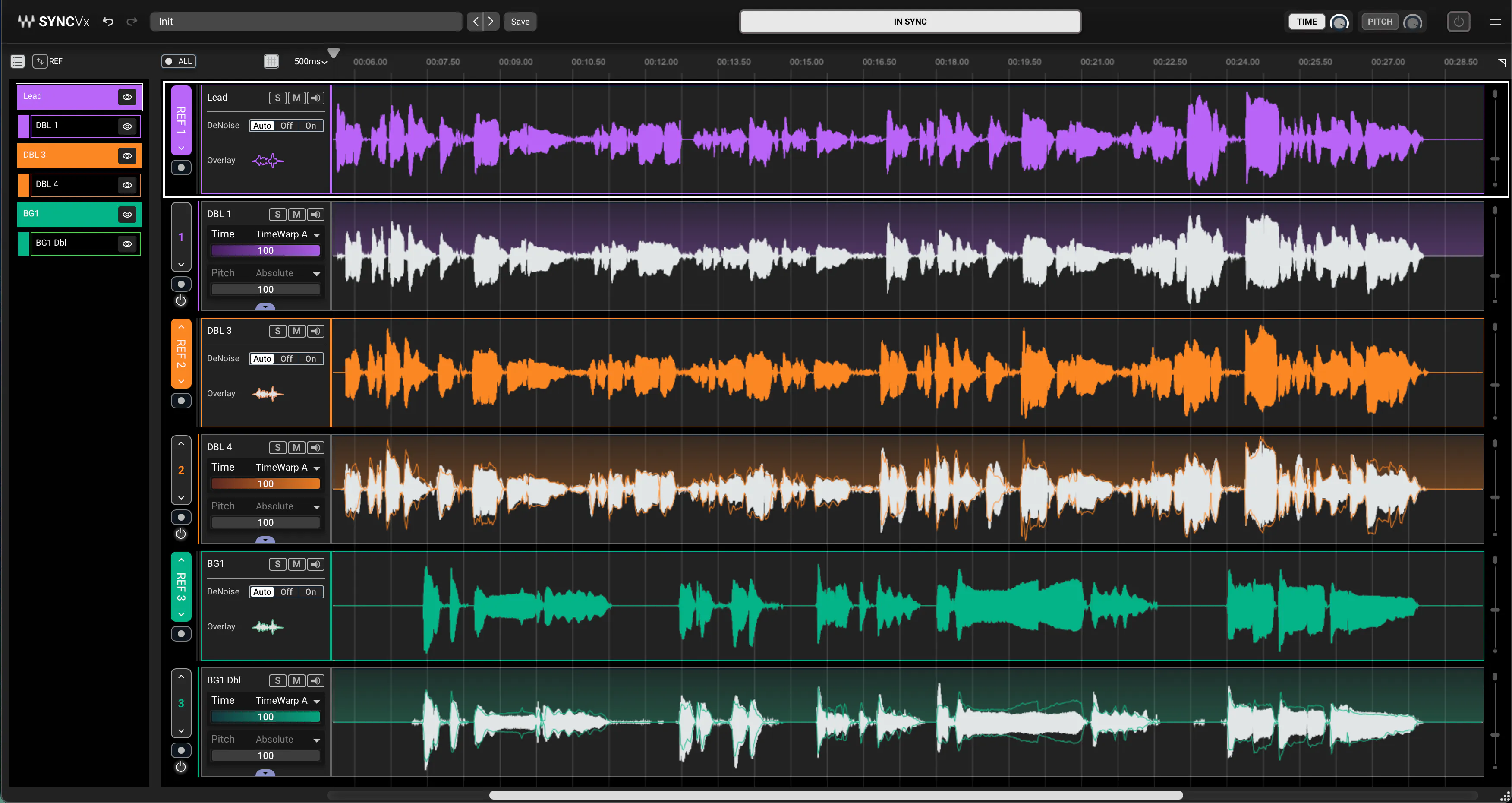
Sync Vx is Waves' vocal alignment plugin, released February 2025. It automatically matches the timing and pitch of multiple vocal tracks to a reference performance. The interface looks like a mini DAW timeline — each vocal track gets its own waveform display, mute/solo controls, and independent time and pitch alignment sliders. It handles up to 16 mono tracks at once with up to four reference tracks, which covers everything from simple doubles to complex harmony stacks.
The automatic alignment is fast and accurate. You can also add sync markers manually to guide it in specific spots. It also has formant shifting and transposition controls, so it works for creative harmony building, not just cleanup.
One thing you need to know before buying: Sync Vx is an ARA2 plugin exclusively. It does not work as a standard insert on a channel. You have to use it through your DAW's ARA2 workflow, which is a different process than loading a typical plugin. It's officially supported in Pro Tools 2024.10, Logic Pro 11, Cubase 13/14, Studio One 6/7, Reaper 7, and Nuendo 13. If you're not on a supported version, this plugin will not work for you. Check your DAW version before purchasing.
Already on the Waves subscription? Sync Vx is included.
Get the Waves subscription here
Want to test it first?
Start with the Waves free trial here
What Synchro Arts VocAlign is
VocAlign has been the industry standard for vocal alignment for over a decade. It analyzes a guide track and warps the timing — and in newer versions, pitch — of a dupe track to match it. It comes in multiple tiers: VocAlign Artist, Project, and Ultra. Each tier adds more features and a higher price. Ultra is the version that directly competes with Sync Vx, since it includes both time and pitch alignment.
It's trusted on major sessions. The name is recognizable in professional circles. But it's expensive, and a lot of engineers have noted its workflow has friction — particularly around how its marker system works compared to more modern tools.
Waves Sync Vx vs VocAlign: the real difference
The simplest way to frame it:
VocAlign is the battle-tested industry standard with years of trust behind it.
Sync Vx is the newer, cleaner, faster tool that holds up in real sessions — at a fraction of the price.
That doesn't make one automatically better. It means they fit different situations.
- Use VocAlign Ultra if you're in a professional studio environment where it's already part of the established workflow, or if your DAW isn't on Sync Vx's supported list yet.
- Use Waves Sync Vx if you're already on the Waves subscription, you're on a supported DAW, and you regularly stack vocals. The value difference is significant.
Key differences at a glance
- Auto time alignment: Both do it well.
- Auto pitch alignment: Sync Vx includes it. VocAlign only at the Ultra tier ($249+).
- ARA2 required: Both current versions require ARA2.
- Max tracks at once: Sync Vx handles up to 16 mono tracks with 4 reference tracks.
- Formant shifting: Sync Vx has it built in. VocAlign is limited here.
- Interface: Sync Vx has a cleaner, more modern DAW-style layout. VocAlign's interface is functional but dated.
- Price: Sync Vx is included in the Waves subscription ($10.99/mo for the full library). VocAlign Ultra runs $249+ standalone.
- Marker workflow: Sync Vx's marker system is more intuitive. VocAlign's is clunkier by comparison.
- Brand track record: VocAlign has 10+ years as the industry standard. Sync Vx is new — 2025 release.
Which is better for artists and home studios?
For most independent artists and home studio engineers in 2026, Sync Vx is the smarter move — especially if you're already on the Waves subscription. You're not paying extra for it. You get time alignment, pitch alignment, formant shifting, and a clean interface, all in one tool that's already in your library.
The ARA2-only requirement is the one thing that will catch people off guard. It's not a deal breaker — once you understand how ARA2 works in your DAW, the workflow is actually more integrated than a standard insert. But you need to look it up for your specific setup before you assume it'll just work.
VocAlign makes sense if you're in professional sessions where it's already expected, or if you're on a DAW version that Sync Vx doesn't support yet. VocAlign Artist is also worth looking at as a more affordable entry point if you want the Synchro Arts ecosystem without the Ultra price.

My real-world take
When I tested Sync Vx, the first thing I noticed was how fast the interface made sense. It looks like a small DAW — each track has its own waveform lane, you can see the alignment happening visually, and the automatic correction kicked in without a lot of manual setup. For a doubled lead vocal on an acoustic track, it handled it cleanly.
VocAlign's strength is its track record. Engineers who've been mixing professionally for years have years of VocAlign sessions behind them. The workflow quirks are documented and people work around them. It's not broken — it's just less elegant than where Sync Vx landed out of the gate.
If I were building a new studio setup today and already had a Waves subscription, there's no reason I'd pay $249 for VocAlign Ultra when Sync Vx is already sitting in my library.
Why this matters as an artist
Tight vocal stacks are one of those things listeners feel even when they can't name it. When doubles and harmonies are slightly off, the record sounds amateur no matter how good the performance was. Getting that locked in without spending hours on manual edits is the kind of workflow upgrade that actually shows up in your output.
That's a big part of why I pay attention to tools like this. I want to spend time making music, not fixing problems a plugin can solve in seconds.
If you want to hear the kind of music I'm talking about, here's the playlist I've been building around the acoustic rap sound:
Other plugin articles worth reading
If you're building out your vocal production setup, these will help too:
- Waves L4 vs FabFilter Pro-L2 (2026): Which Limiter Is Better?
- Waves L4 Ultramaximizer vs L2: What's the Difference and Which Should You Use?
- How Loud Should Vocals Be in a Mix? dB / LUFS Cheat Sheet for Artists
And if you're ready to grab Sync Vx or check out the Waves subscription, here are the links:
Get Waves Sync Vx
Start your Waves free trial