
Waves CLA-76 vs RComp: What’s Better for Vocal Compression? (2025 Breakdown)

If you’re mixing vocals and not sure whether to use CLA-76 or RComp, you’re not alone. They’re two of Waves Audio’s most popular compressors — but they have very different personalities. One is aggressive and punchy, the other is smooth and transparent.
I’ve used both on tons of melodic rap sessions, including my own music like “All Away”, and in this article, I’ll help you figure out which one fits your sound better — and how to dial them in the right way.
🎛️ Waves CLA-76: Fast, Aggressive, and Energetic

The CLA-76 is modeled after the classic 1176 hardware compressor. It’s known for its lightning-fast attack and release, and for adding punch and presence to any vocal.
Best for: Rap vocals, punchy melodic vocals, upfront energy
- Set the attack slow (around 5) and release fast (2 or 3) for more bounce
- Use 4:1 or 8:1 ratios for general vocal compression
- Great on verses that need to sit confidently in the mix
I used CLA-76 on parts of the verses in “All Away” to bring out that gritty emotion and keep the delivery controlled without killing the feeling.
🌊 Waves RComp: Smooth, Clean, and Transparent
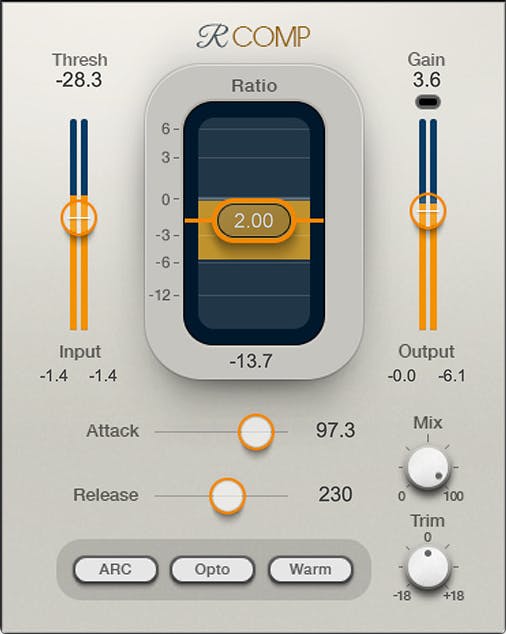
The Waves Renaissance Compressor (RComp) is more subtle. It’s ideal when you want your vocals to feel controlled but not overly compressed. It adds warmth and polish without getting in the way.
Best for: Hooks, emotional vocals, smoother delivery
- Set a medium attack and release for a natural feel
- Try Opto mode for more musical compression
- Use the Warm button to add analog-style tone
I often use RComp on hooks or background vocals — anywhere I want the vocal to breathe while still staying tight in the mix.
📊 Side-by-Side Comparison
| Feature | CLA-76 | RComp |
|---|---|---|
| Compression Style | Fast, punchy, aggressive | Smooth, subtle, transparent |
| Tone | Bright, energetic, vintage | Warm, controlled, clean |
| Best Use | Verses, rap vocals, high-energy sections | Hooks, BG vocals, softer vocals |
| Ease of Use | Simple layout, fast workflow | More tweakable with soft knee/attack |
My Take: Use Both Strategically
Honestly, I don’t pick one over the other — I use both depending on the vibe. If I need a vocal to cut through, I reach for CLA-76. If I want warmth and balance, RComp is the move. You can even stack them if you want CLA-76 first, then RComp after for leveling.
That combo helped me finish “All Away” — especially after revisiting the session months later. The contrast between the two compressors let me shape the tone of each vocal section just right.
Try Them for Yourself
- 🔗 Start your free Waves plugin trial here
- 🎛️ Try Pro Tools free here
- 🎙️ Check out my Amazon studio gear list
Want to Hear the Difference?
Check out my song “All Away” on Spotify — it’s a perfect example of how both compressors can be used in one track without sounding over-processed.
🎧 Listen on Spotify:
https://open.spotify.com/playlist/55hZj4oRTcoNjwGqGoUGeA
Need Help Dialing in Your Mix?
If you’re trying to figure out which plugins to use, or just want a second ear on your session, I offer mixing and mastering services for independent artists and engineers.

Let’s get your vocals hitting the way they’re supposed to!